
● Production & Knowledge
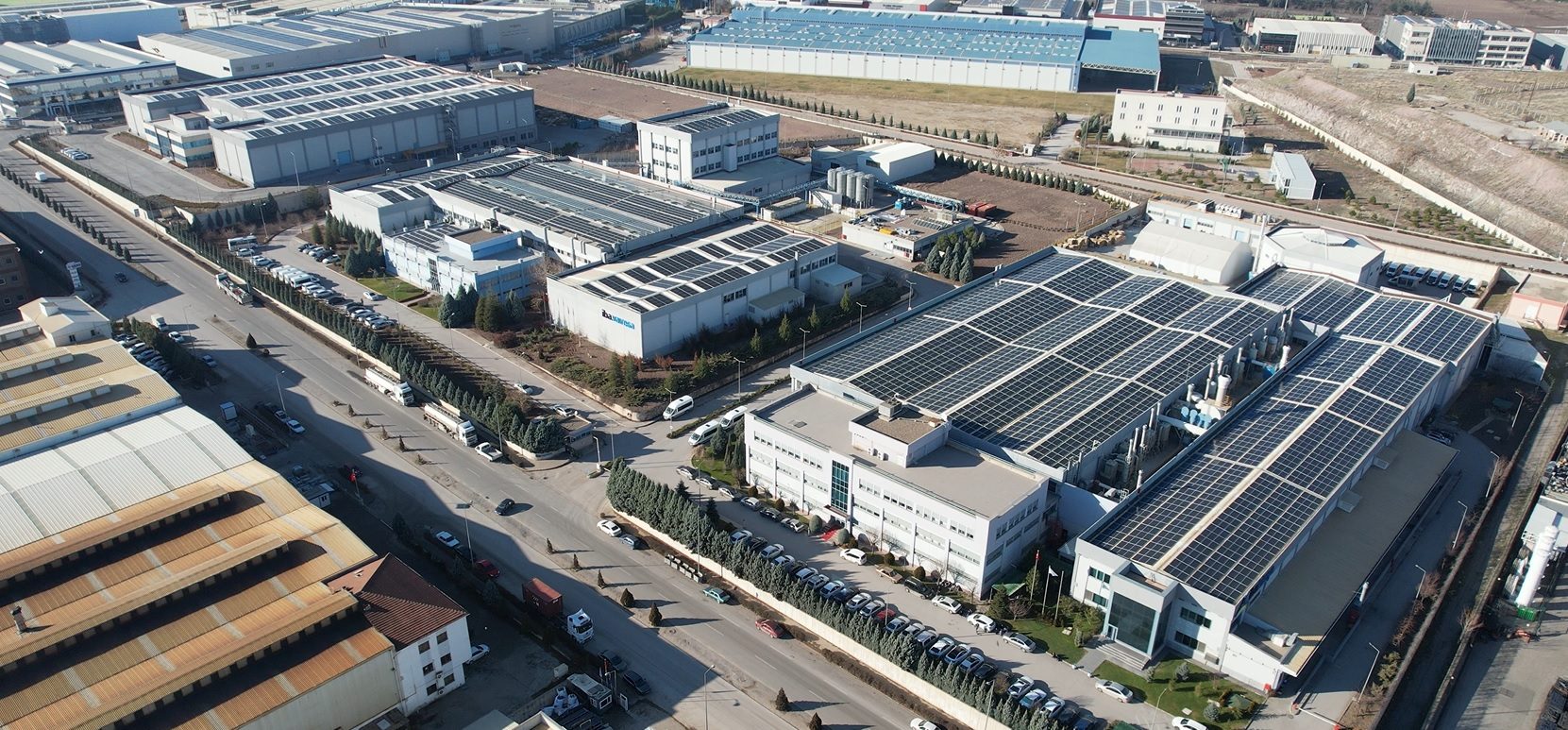
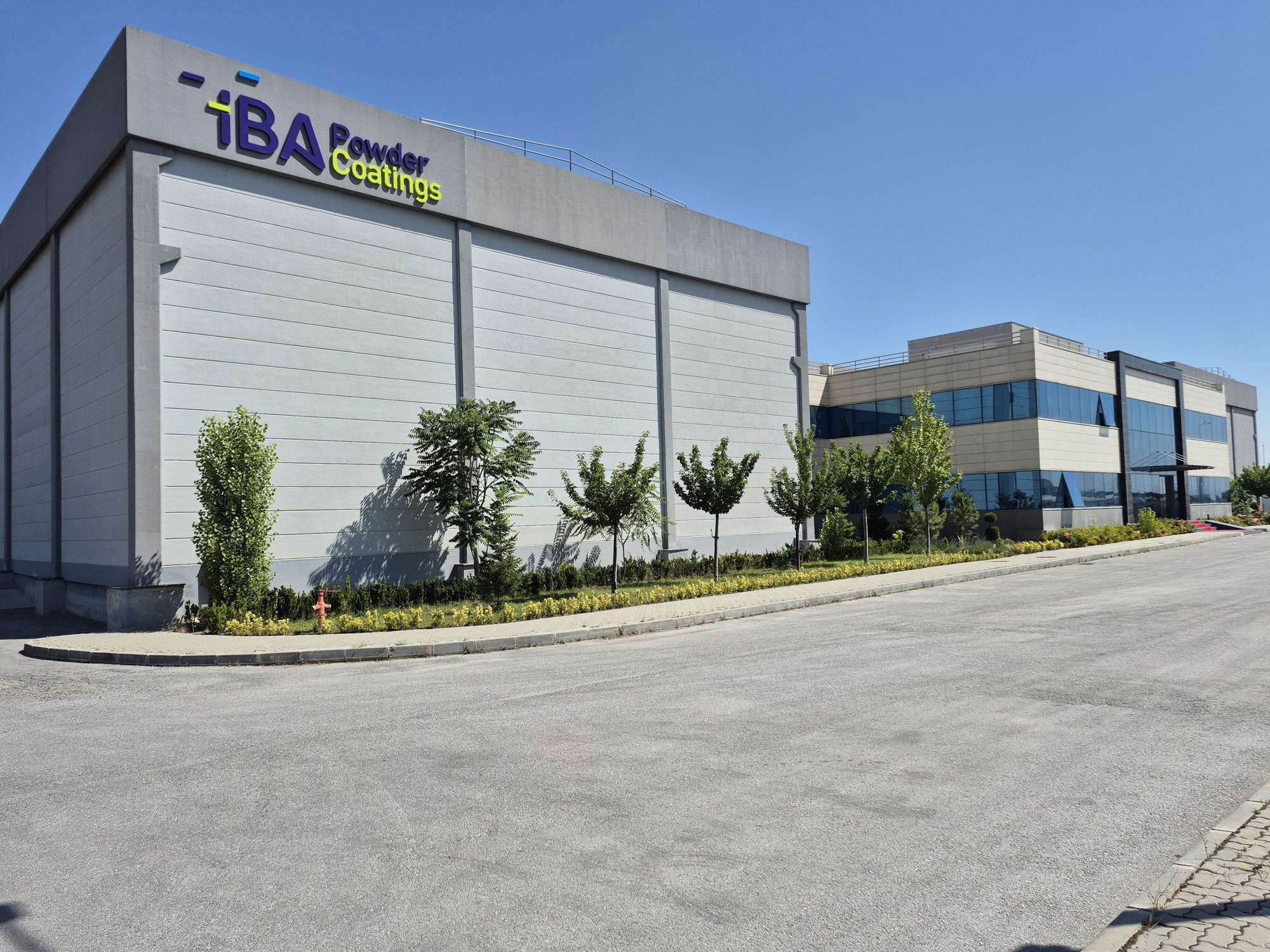
From formulation to quality-assured delivery: Our powder coatings are developed and produced by our premium partner, IBA Kimya—a second-generation family-owned business. Here, we’ll walk you through the individual production steps and explain the key basics of powder coatings.
founded in Ankara
Generation Family Business
Exporting Countries
● Production
Powder coating is a solvent-free coating material that consists of 100% solids—with no solvents and no volatile organic compounds (VOCs). To ensure that it can be applied evenly and provide reliable protection, it undergoes several precisely coordinated production steps.
Step 1
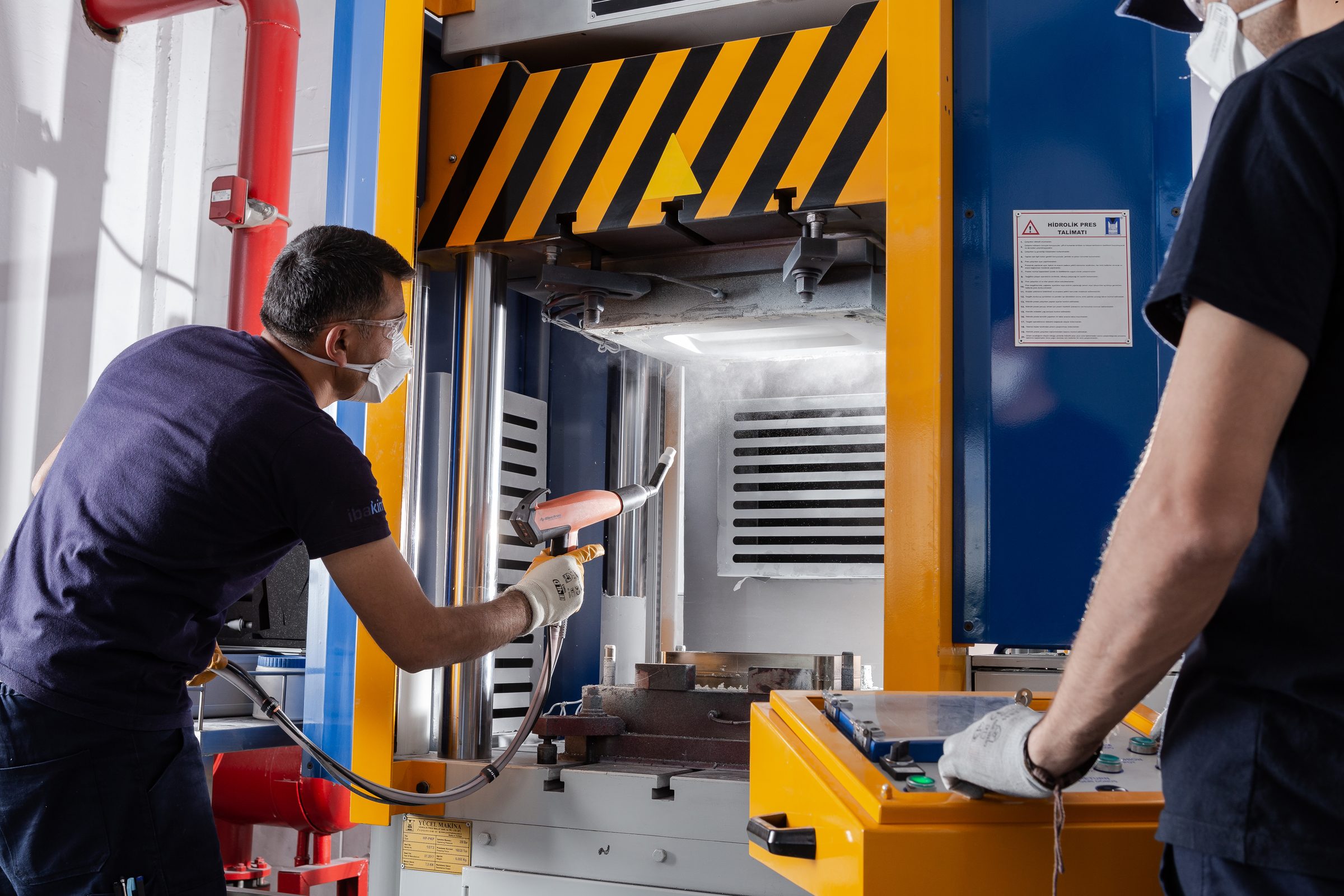
We create the right formulation for every application—developed and tested under real-world conditions, such as in the hot press for in-mold and press-curing coatings. The components:
Step 2
The raw materials are weighed precisely according to the formula and processed in a mixer into a homogeneous premix—the basis for a consistent color from batch to batch.

Step 3
The premix is melted in the extruder. During this process, pigments and fillers are finely and evenly distributed throughout the binder.

Step 4
The hot mixture is rolled out on the cooling conveyor, cooled, and broken into small chips.
Step 5
Sifter mills grind the chips into a fine powder with a defined particle size distribution—the median particle size is typically between 30 and 50 µm. Oversize particles are recirculated, while fine particles are separated out.
Step 6
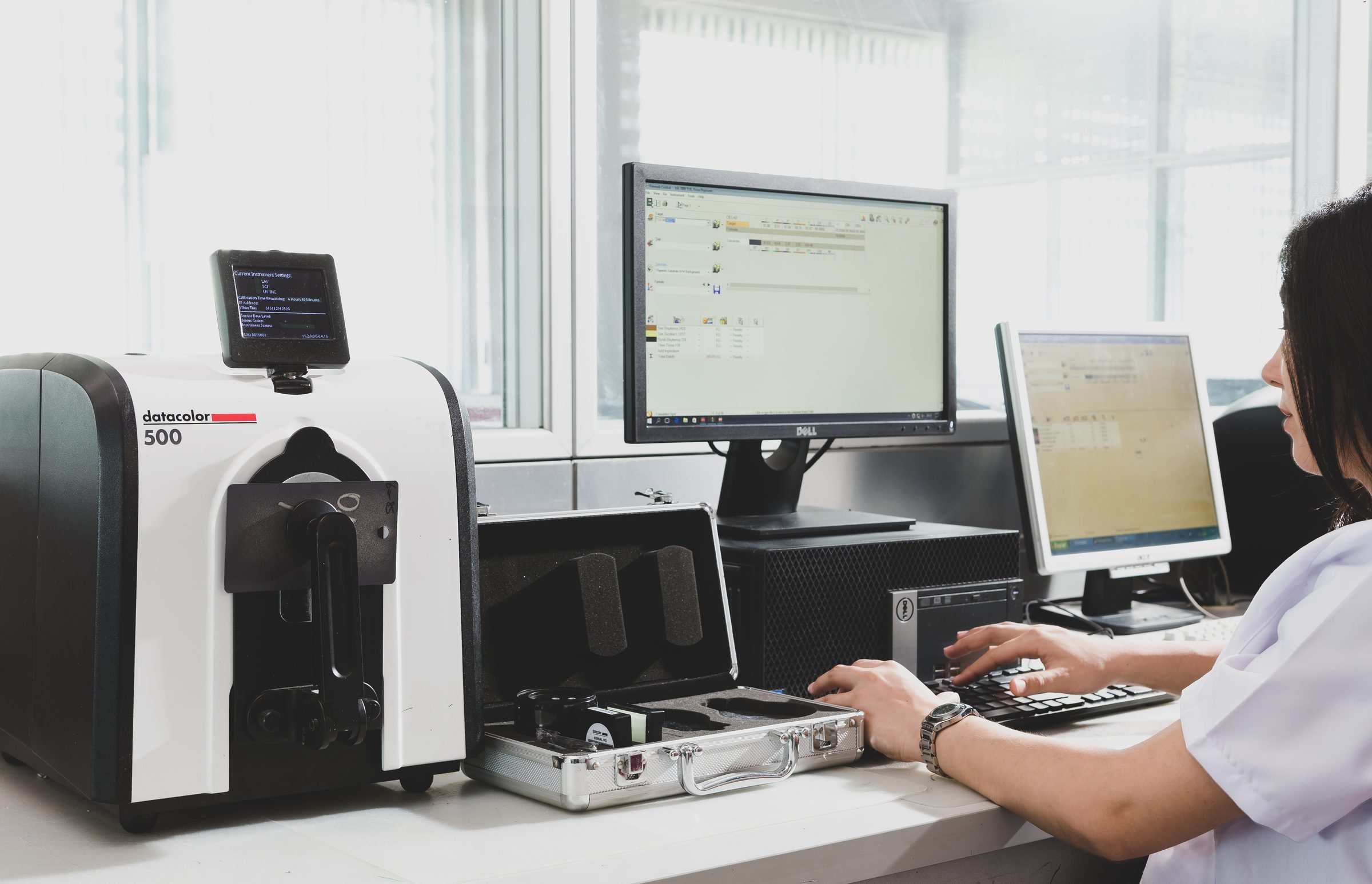
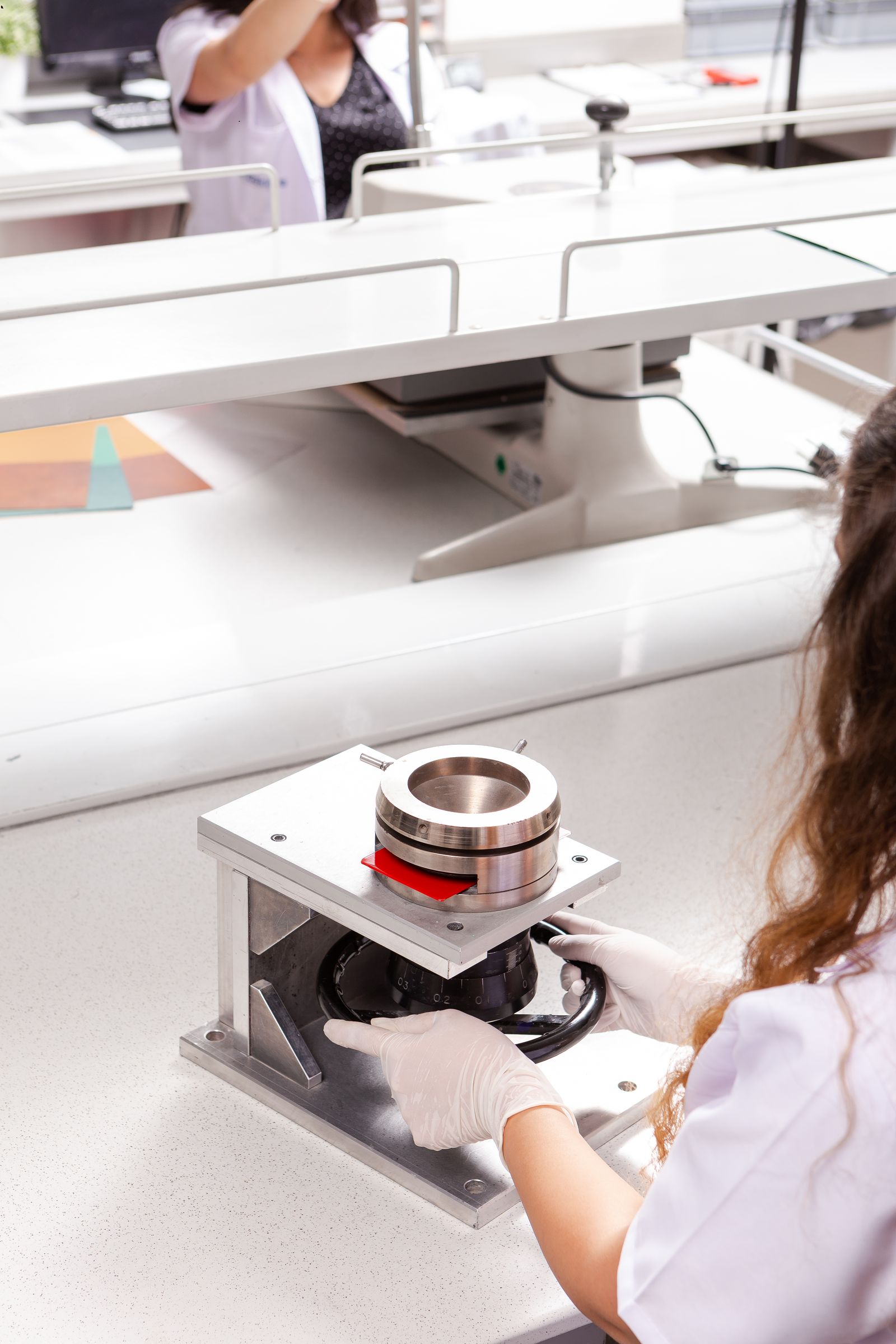
In the laboratory, test panels are coated and baked. Color, gloss, particle size, and finish are tested—the color is measured spectrophotometrically and compared to the target value.

Step 7
The inspected powder is packaged, labeled, and shipped to our central warehouse in Stuttgart—from there, we reliably deliver it to you.
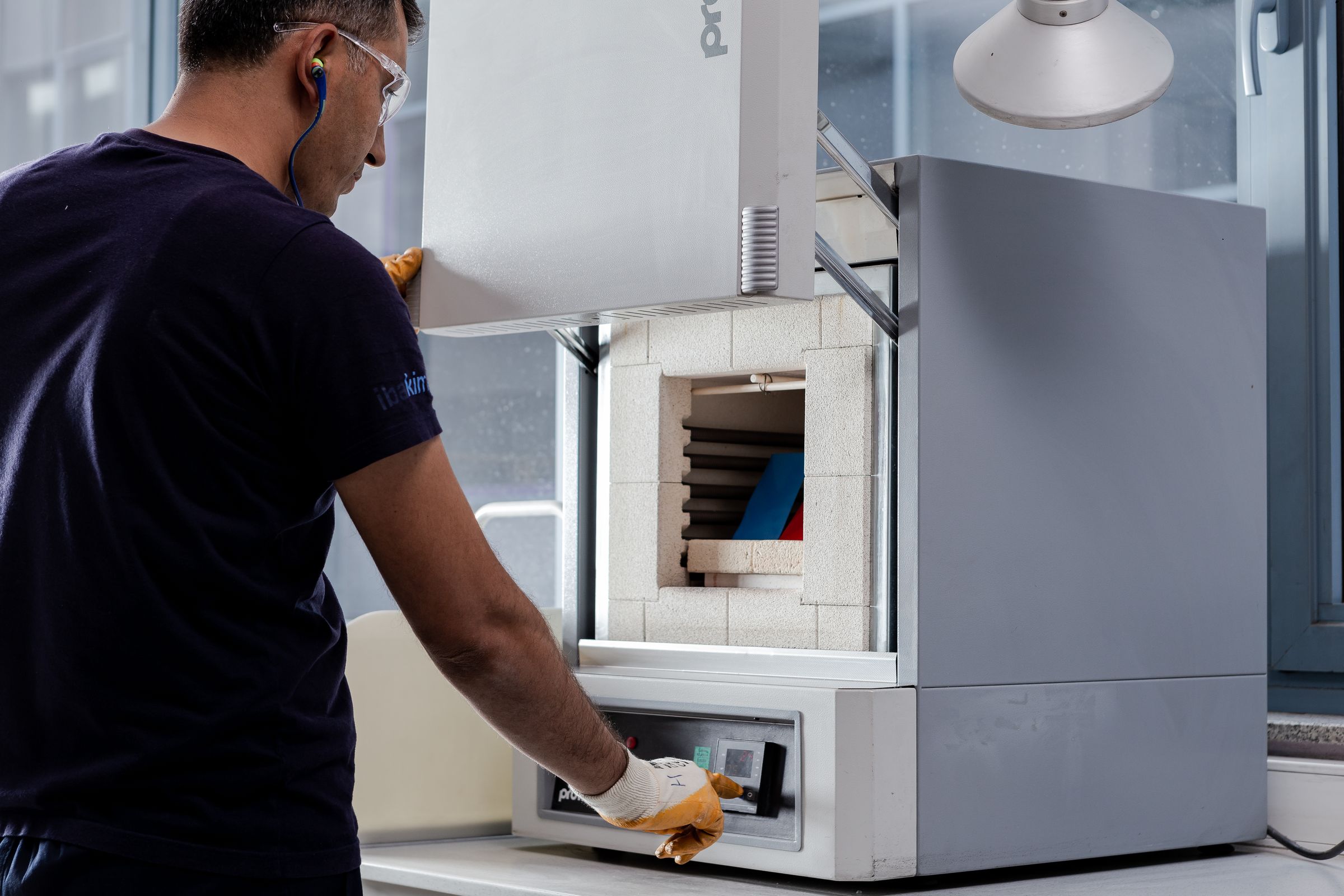
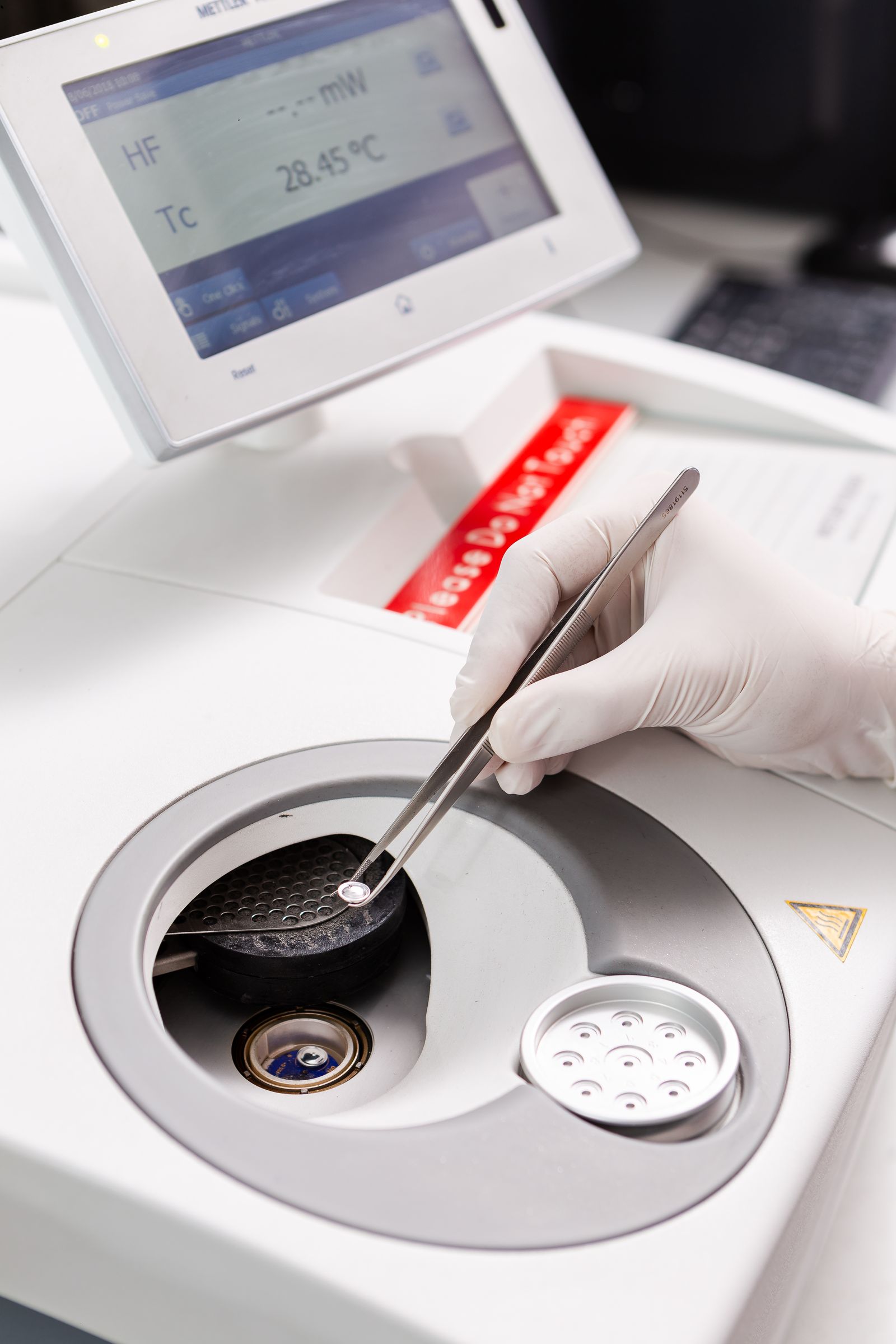
Before a powder coating is approved, it undergoes a series of tests in the laboratory—from baking the test panels to color measurement and thermal analysis.
● Chemistry
Exterior · Architecture
The standard for outdoor applications: UV- and weather-resistant, used in architecture, steel construction, and for outdoor components. Highly weather-resistant grades (Superdurable) meet the increased requirements of QUALICOAT Class 2. TGIC-free systems are also available, such as those based on hydroxyalkylamide.
Interior · Corrosion Protection
Excellent resistance to chemicals and corrosion, as well as electrical insulation—but not UV-resistant. Epoxy powder coatings are therefore used indoors and as primers that can be overcoated with polyester.
Interior
For most indoor applications: good chemical and mechanical properties and a wide range of gloss levels and textures—typically used for furniture, shelving systems, appliances, and control cabinets.
Smooth surfaces
Excellent flow properties for exceptionally smooth surfaces; good weather and chemical resistance. This also allows for the creation of graffiti-resistant surfaces. Polyurethane systems generally require higher curing temperatures.
● Processing
Step 1
Adhesion and corrosion protection begin before painting: The surface is degreased, cleaned, and treated with a conversion coating—for aluminum, this is usually a chromium-free wet chemical process; for steel, it is typically achieved through iron or zinc phosphating or blasting.
Step 2
The powder is electrostatically charged and adheres to the grounded component. Corona guns operate at high voltage (approx. 30–100 kV); tribo-charging through friction reaches internal corners and recesses more effectively. Overspray is collected, screened, and reused.
Step 3
In the oven, the powder melts, flows, and cross-links. The key factor is the object temperature—the temperature of the part itself. A typical curing time is, for example, 15 minutes at 180 °C; the specified curing window is listed in the technical data sheet.
Step 4
Tests include, among other things, coating thickness, gloss level (60° according to DIN EN ISO 2813), and adhesion (cross-cut test according to DIN EN ISO 2409). Typical coating thicknesses range from 60 to 100 µm; for facades certified under QUALICOAT, a minimum of 60 µm generally applies.
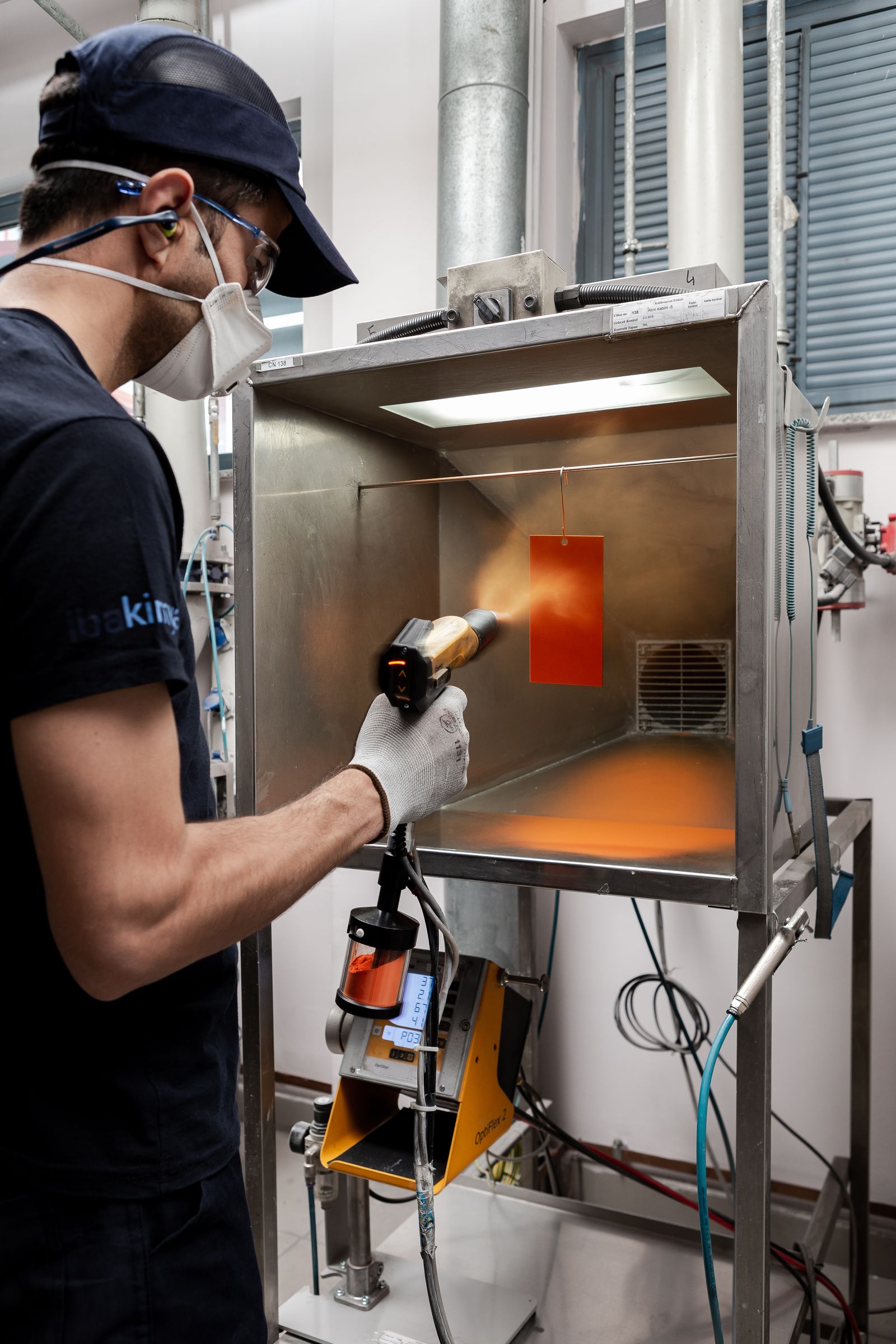
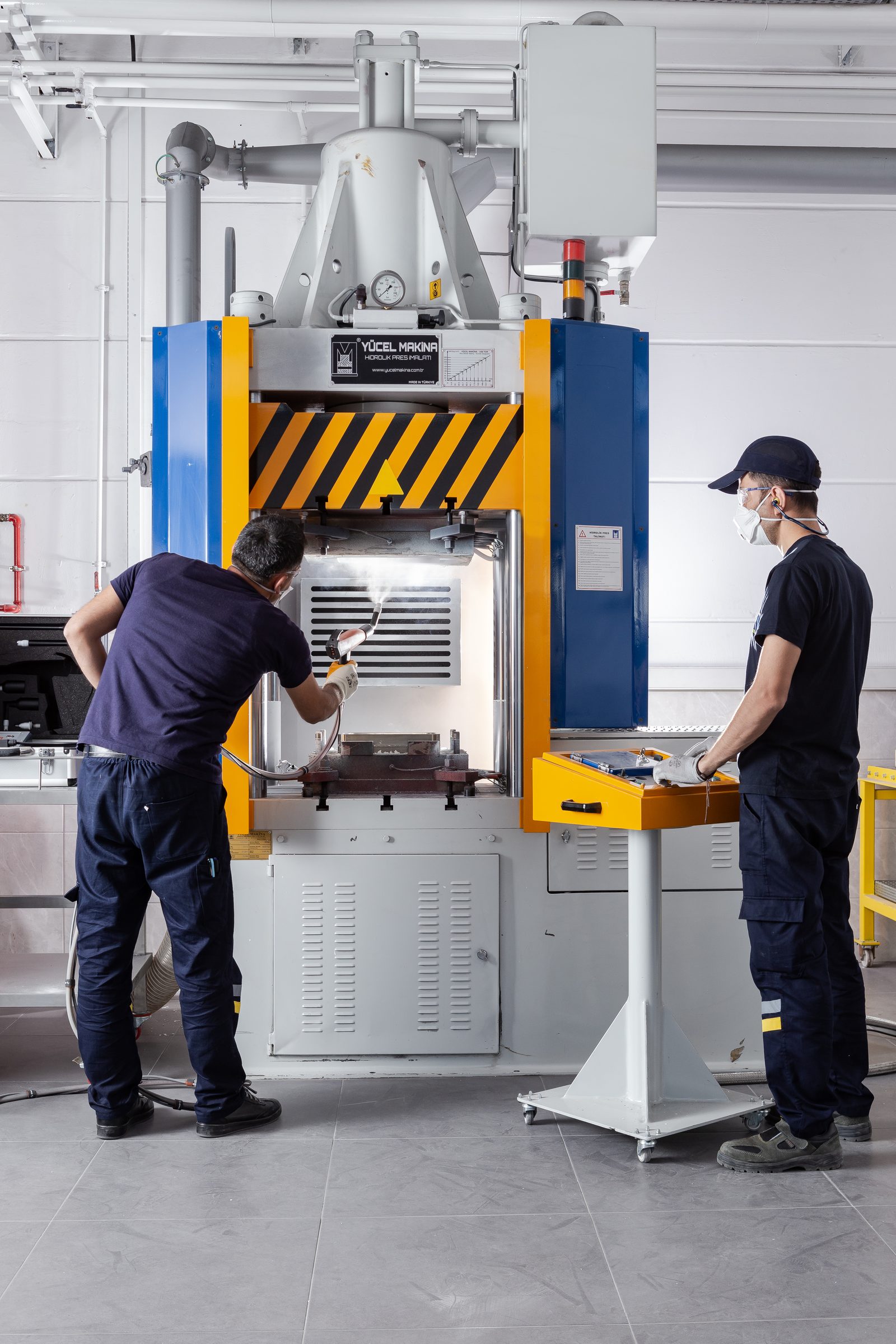
Corona charging is the standard high-power process. However, in corners and deep recesses, the so-called Faraday cage can hinder powder deposition, and more material builds up along edges. Tribo-charging does not require high voltage and is particularly well-suited for complex geometries—but it does require a powder that is suitable for this process.
● Quality
There are independent quality certifications for facades, windows, and steel structures. The standard for weather resistance is outdoor weathering testing in Florida: high levels of UV radiation, heat, and humidity make this location a globally recognized benchmark for testing. The primary factors evaluated are gloss retention and color stability.
| Quality Class | Florida Weathering | Use |
|---|---|---|
| QUALICOAT Class 1 | 1 year, minimum residual gloss of 50% | Architectural Standard |
| QUALICOAT Class 2 | 3 years, annual evaluation | Superdurable – Higher Standards for Color and Gloss Retention |
| QUALICOAT Class 3 | 10 years | Hyperdurable – the highest standards |
| GSB Standard · Master · Premium | Standard: approx. 12 months; Master's: approx. 36 months | Premium is the highest GSB level |
International quality standards for the coating of architectural components—including specifications for powder coatings, pretreatment, and coating operations. We offer QUALICOAT- and GSB-certified powder coatings for architectural applications.
Quality mark for coatings on steel and galvanized steel. It is based on the corrosivity categories specified in DIN EN ISO 12944—up to C5 for environments with very high corrosion exposure.
● Surfaces
From high gloss to satin gloss, silk matte, and deep matte. Gloss is measured in gloss units (GU) at a 60° angle in accordance with DIN EN ISO 2813. Matting agents such as IBA Frost can be used to specifically reduce the gloss level of smooth powder coatings.
Fine and coarse textures conceal imperfections and are durable in everyday use. The Tex-Add texturing additive can be used to add texture to smooth powder coatings.
In dry-blend metallics, the effect pigments are simply mixed in and may separate during application and recovery. In bonded metallics such as IBA Bond, they are firmly bonded to the powder particles—ensuring a uniform effect and reusable overspray.
Hammered, Antique, Moiré, Crocodile, Woodgrain, Soft-Touch, Flip-Flop, Chrome, Glow, and Neon effects, as well as transparent clear coats. All Special Effects
Antibacterial (IBA Clean), ESD-dissipative (IBA Ground), thin-film (IBA Thin), outgassing-stable (IBA Release), barrier protection (Corrshield), and powder coatings for glass and busbars. All Smart Coatings
● Practice
Store in a cool, dry place in the original container, generally at a maximum temperature of 25 °C and away from direct sunlight. The shelf life is specified in the technical data sheet.
Example: 1.5 g/cm³ × 70 µm = 105 g/m² – theoretical value, plus application losses.
We provide personalized advice—from selecting the right powder to delivery.
Industrial powder coatings—certified, with personalized advice, and reliably delivered from our central warehouse in Stuttgart. Premium partner of IBA Kimya.
© 2026 Pulvercoat Vertrieb e.K. – All rights reserved · Premium partner of IBA Kimya | Legal Notice · Privacy Policy
| Cookie | Duration | Description |
|---|---|---|
| cookielawinfo-checkbox-advertisement | 1 year | Set by the GDPR Cookie Consent plugin, this cookie is used to record the user consent for the cookies in the "Advertisement" category . |
| cookielawinfo-checkbox-analytics | 11 months | This cookie is set by GDPR Cookie Consent plugin. The cookie is used to store the user consent for the cookies in the category "Analytics". |
| cookielawinfo-checkbox-functional | 11 months | The cookie is set by GDPR cookie consent to record the user consent for the cookies in the category "Functional". |
| cookielawinfo-checkbox-necessary | 11 months | This cookie is set by GDPR Cookie Consent plugin. The cookies is used to store the user consent for the cookies in the category "Necessary". |
| cookielawinfo-checkbox-others | 11 months | This cookie is set by GDPR Cookie Consent plugin. The cookie is used to store the user consent for the cookies in the category "Other. |
| cookielawinfo-checkbox-performance | 11 months | This cookie is set by GDPR Cookie Consent plugin. The cookie is used to store the user consent for the cookies in the category "Performance". |
| CookieLawInfoConsent | 1 year | Records the default button state of the corresponding category & the status of CCPA. It works only in coordination with the primary cookie. |
| elementor | never | This cookie is used by the website's WordPress theme. It allows the website owner to implement or change the website's content in real-time. |
| viewed_cookie_policy | 11 months | The cookie is set by the GDPR Cookie Consent plugin and is used to store whether or not user has consented to the use of cookies. It does not store any personal data. |
| Cookie | Duration | Description |
|---|---|---|
| _pk_id.1.f131 | 1 year 27 days | No description |
| _pk_ses.1.f131 | 30 minutes | No description |
| Cookie | Duration | Description |
|---|---|---|
| _pk_id.1.f131 | 1 year 27 days | No description |
| _pk_ses.1.f131 | 30 minutes | No description |


Pulvercoat Vertrieb e. K.
Felix-Dahn-Straße 29
70597 Stuttgart
Tel +49 711 67 42 87 30
Fax +49 711 67 42 87 31